Decision Breakdowns
How the anchors guide leadership decisions under pressure.
Empowerment Design strengthens leadership inside real situations, not just in theory.
When pressure shows up, information conflicts.
Important decisions must be interpreted under uncertainty.
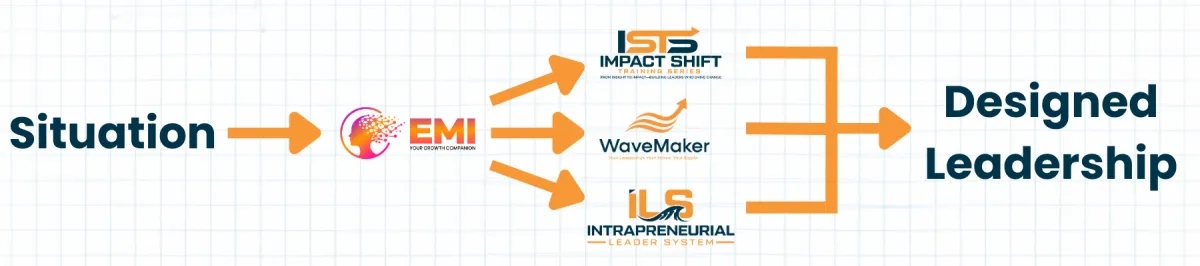
Each breakdown on this page examines a real leadership situation and shows how the four anchors of Empowerment Design (ISTS, WaveMaker, ILS, and EMI) interact when those moments appear.
The goal is not to provide advice.
The goal is to show how designed leadership behaves.

How To Read These Breakdowns
Each scenario is examined in three layers.
First, the situation is described clearly.
Second, the natural reaction most companies experience is identified.
Third, the anchors show how the situation is interpreted and resolved inside a structured leadership system.
This format reveals the difference between reactive leadership and designed leadership.
Scenario: Revenue Drops 12 Percent
Revenue drops unexpectedly over a six week period.
Leadership notices the shift quickly.
The numbers create pressure because future performance is uncertain.
At this moment, many companies begin reacting immediately.
Meetings multiply.
Hiring freezes appear.
Marketing spend compresses.
The reaction feels decisive, but it is often unstructured.
How Reactive Leadership Interprets This
Numbers become the loudest signal in the system.
Confidence rises and falls with performance.
Leaders begin searching for external signals to confirm what to do next.
This often produces defensive decisions rather than disciplined interpretation.
How the Anchors Interpret This
WaveMaker stabilizes interpretation.
Leaders examine whether the variance is seasonal or operational before reacting strategically.
ISTS keeps execution cadence stable.
Operational rhythms continue instead of collapsing under pressure.
ILS clarifies decision lanes.
Sales leadership examines pipeline health while ownership protects long-term direction.
EMI reinforces structured thinking.
Leadership decisions remain disciplined even while uncertainty is present.
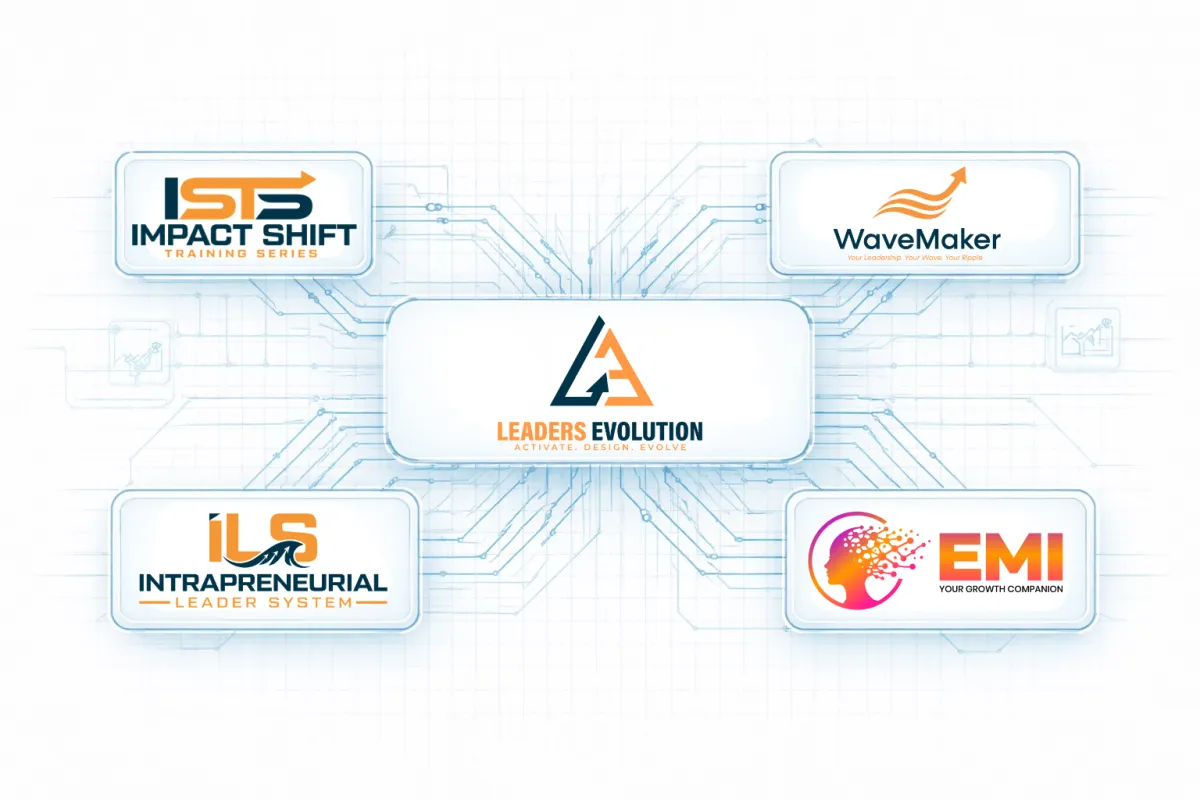
The four anchors of Empowerment Design (ISTS, WaveMaker, ILS, EMI) operate together inside Leaders Evolution.
When they work in combination, leadership stays steady under pressure that would otherwise destabilize the organization.
Explore the system in depth:
Empowerment Design overview | ISTS | WaveMaker | ILS | EMI
Additional Decision Breakdowns
Scenario: Senior Leadership Conflict
Tension begins to surface between members of the senior leadership team.
Differences in perspective become more visible in meetings.
Discussions take longer and begin to lose direction.
Decisions are delayed or revisited after they are made.
The conflict creates friction that extends beyond the individuals involved.
Teams begin to feel the inconsistency in direction.
At this point, many organizations attempt to resolve the issue quickly.
Conversations are forced.
Alignment is pushed.
In some cases, one perspective is elevated to restore order.
The situation appears addressed, but the underlying misalignment remains.
How Reactive Leadership Interprets This
Conflict is seen as a breakdown in alignment or professionalism.
Leaders focus on resolving disagreement as quickly as possible.
Pressure is placed on individuals to align with a unified direction.
The goal becomes restoring cohesion, often at the expense of clarity.
This approach reduces visible tension but does not resolve the difference in perspective.
Decisions may move forward, but confidence in them remains uneven.
How the Anchors Interpret This
WaveMaker stabilizes interpretation.
Leadership examines the source of the conflict rather than suppressing it.
Differences in perspective are explored to understand how each leader is seeing the situation.
ISTS maintains operational consistency.
Execution rhythms continue without being disrupted by leadership tension.
Teams are protected from instability at the top.
ILS clarifies decision lanes.
Responsibility for the decision is defined so resolution does not depend on forced agreement.
Leaders contribute perspective without needing consensus to move forward.
EMI reinforces structured thinking.
The conflict is used to refine understanding rather than avoided.
Decisions are made from a clearer view of the situation, not from pressure to align.
Scenario: Strategic Disagreement Between Departments
Two departments begin to diverge in how they believe the business should move forward.
Each group builds a case based on its own priorities and data.
Discussions become more frequent as alignment is attempted.
Meetings extend as each side reinforces its position.
The disagreement slows forward movement as decisions are delayed.
Teams begin to feel the tension through mixed direction.
At this point, many organizations move to resolve the conflict quickly.
Leadership steps in to determine the correct path.
One direction is selected to restore momentum.
The decision creates temporary clarity, but the underlying difference in perspective remains.
How Reactive Leadership Interprets This
The disagreement is treated as a need for alignment across teams.
Leaders focus on choosing the most viable direction based on available data.
Departments are expected to support the final decision once it is made.
The priority becomes restoring forward movement as quickly as possible.
This approach resolves the visible conflict but does not reconcile how each department is interpreting the situation.
Execution resumes, but internal tension may persist beneath the surface.
How the Anchors Interpret This
WaveMaker stabilizes interpretation.
Leadership examines how each department is framing the situation before selecting a direction.
Differences are used to expand visibility rather than force agreement.
ISTS maintains execution cadence.
Operational progress continues while the strategic question is clarified.
Teams remain focused on current responsibilities instead of stalling.
ILS clarifies decision lanes.
Ownership of the strategic decision is defined, allowing input without requiring full consensus.
Departments contribute perspective without competing for control.
EMI reinforces structured thinking.
The disagreement is processed through disciplined evaluation rather than urgency.
The final decision reflects a clearer understanding of the situation, not a compromise between positions.
Scenario: Operational Congestion
Work begins to accumulate across multiple areas of the business.
Projects slow as dependencies increase between teams.
Tasks are started but not completed at the expected pace.
Leaders notice that progress is inconsistent across departments.
Communication increases as teams attempt to coordinate more closely.
The volume of activity remains high, but forward movement becomes uneven.
At this point, many organizations respond by increasing oversight.
Additional meetings are scheduled to track progress.
Processes are adjusted in an attempt to improve flow.
The activity creates the appearance of control, but the underlying congestion remains.
How Reactive Leadership Interprets This
Congestion looks like a process problem.
Leaders add coordination layers to fix it.
Status meetings multiply.
Project trackers get more detailed.
Cross-functional checkpoints expand.
The activity creates the appearance of control, but the underlying flow problem remains.
Output looks the same.
Friction increases.
How the Anchors Interpret This
WaveMaker stabilizes interpretation.
Leadership examines where work is being slowed by unclear prioritization or overlapping responsibility.
The focus shifts from volume to clarity of movement.
ISTS maintains operational rhythm.
Execution cadence is reinforced instead of disrupted by reactive changes.
Teams continue to operate within defined rhythms rather than expanding coordination unnecessarily.
ILS clarifies decision lanes.
Ownership is re-established where work is being delayed.
Teams move forward without waiting for cross-functional confirmation on every step.
EMI reinforces structured thinking.
Congestion is evaluated as a system condition rather than isolated inefficiencies.
Adjustments are made to restore flow without increasing complexity.
Scenario: Rapid Growth Pressure
The business begins to grow at a faster pace than expected.
New opportunities appear across multiple areas at the same time.
Demand increases, placing strain on current capacity.
Teams begin taking on additional work to keep up with momentum.
Hiring discussions accelerate as leaders attempt to support expansion.
Decisions are made more quickly to maintain speed.
At this point, many organizations prioritize capturing growth.
Processes are adjusted to move faster.
Roles begin to stretch beyond their original scope.
The pace creates forward movement, but underlying stability begins to weaken.
How Reactive Leadership Interprets This
Growth is seen as a signal to increase output and expand capacity.
Leaders focus on maintaining speed to avoid missing opportunity.
Hiring, investment, and expansion decisions are accelerated.
Teams are encouraged to take on more responsibility to keep pace.
The priority becomes sustaining momentum at all costs.
This approach drives short-term results but often introduces strain across the system.
Execution continues, but consistency begins to erode.
How the Anchors Interpret This
WaveMaker stabilizes interpretation.
Leadership examines where work is genuinely blocked versus where it just feels slow.
Decisions are made with awareness of long-term impact, not just immediate opportunity.
ISTS maintains operational rhythm.
Existing execution cadences stay protected rather than being disrupted by reactive coordination.
Growth is absorbed without abandoning structure.
ILS clarifies decision lanes.
Ownership is reestablished where decisions have been quietly drifting upward.
Leaders avoid creating dependency as the organization scales.
EMI reinforces structured thinking.
Congestion is treated as a system condition with a structural cause, not as individual underperformance.
The company grows without losing the structure that made the growth possible in the first place.